Good Salon Shampoo
How to Choose the Best Salon Shampoo
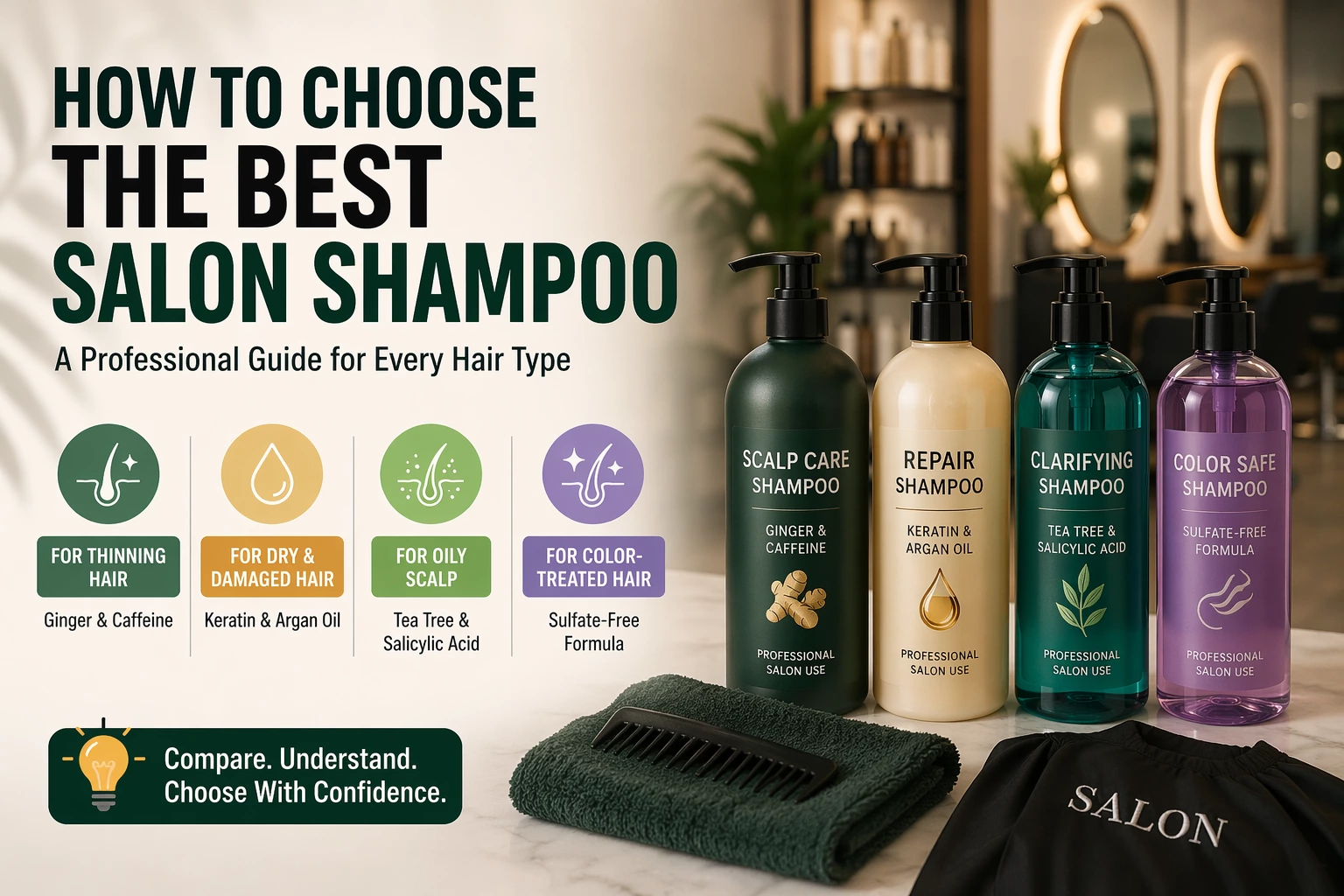
A good salon shampoo is not defined by price or branding alone. It is defined by how well it solves a specific hair or scalp problem.
Professional salon shampoos are usually designed around targeted performance:
- scalp balance and oil control
- moisture repair and smoothing
- color protection
- hair-strengthening support
Unlike many general-purpose products, salon shampoos are built to deliver consistent results over repeated use, which is why they are commonly recommended in professional settings.
For both consumers and business buyers, the key is not “which shampoo is best,” but which shampoo is best for a specific need.
Quick Answer: Which Salon Shampoo Should You Choose?
If you want a fast decision:
- Thinning hair → Ginger or caffeine-based shampoo
- Dry/damaged hair → Keratin or argan oil shampoo
- Oily scalp → Clarifying or tea tree shampoo
- Color-treated hair → Sulfate-free shampoo
- Daily use → Balanced professional formula
The most successful salon products are usually those with a clear, single benefit, rather than trying to solve everything at once.
Salon Shampoo vs Drugstore Shampoo
One of the most common questions is whether salon shampoos are actually better than regular ones.
The reality is more nuanced.
| Factor | Salon Shampoo | Drugstore Shampoo |
|---|---|---|
| Formula focus | Designed for specific hair/scalp needs | Broad, general use |
| Ingredient positioning | Often feature targeted active ingredients | Simpler positioning |
| Performance consistency | Built for repeated professional use | Varies widely |
| Color & damage care | Usually stronger positioning | Depends on product |
| Market positioning | Premium / specialized | Mass market |
A salon shampoo is only “better” when it matches the user’s condition correctly. Otherwise, even a premium product can feel ineffective.
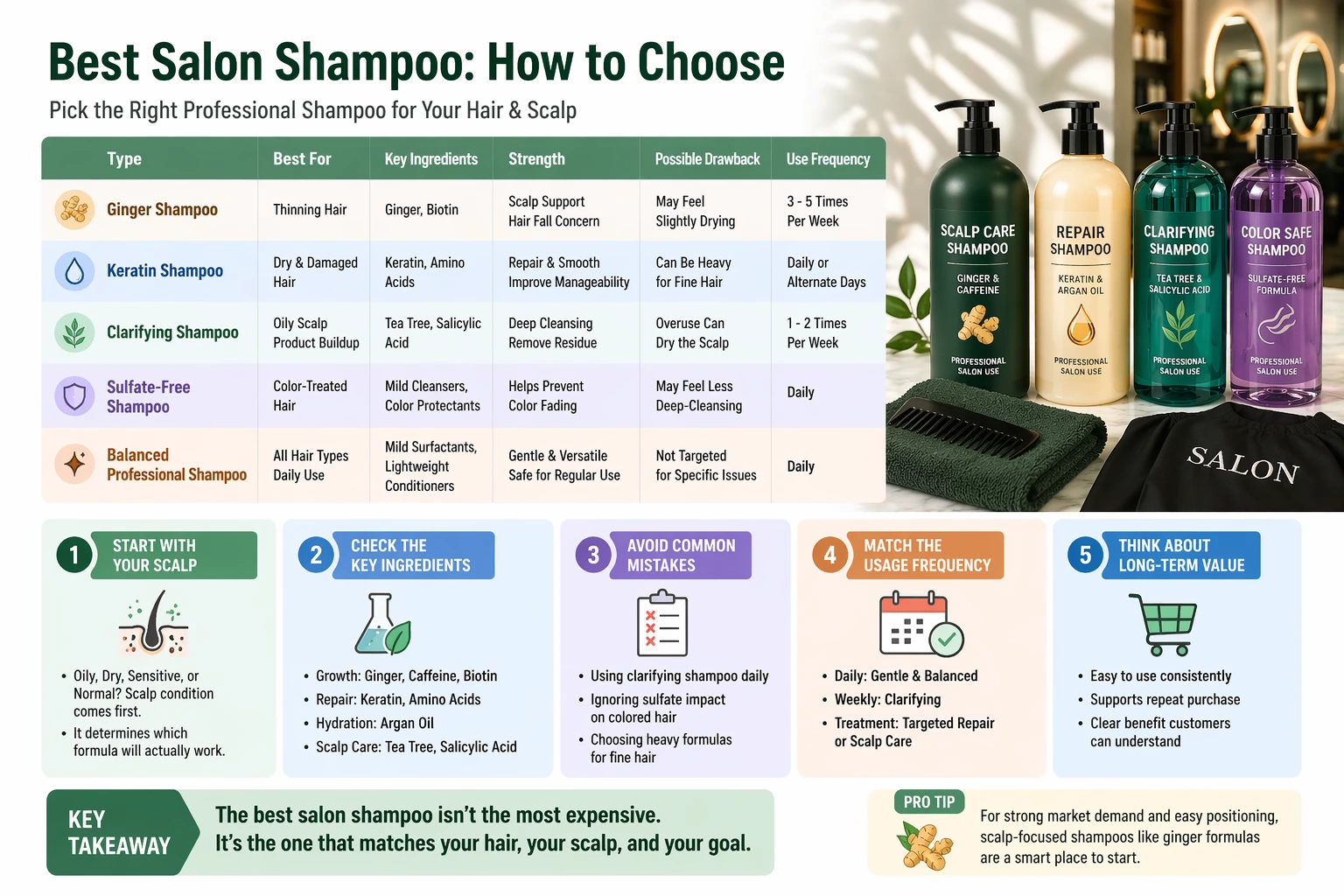
Comparison Table: Best Salon Shampoo Types
| Type | Best For | Key Ingredients | Strength | Weakness | Usage |
|---|---|---|---|---|---|
| Ginger Shampoo | Thinning hair | Ginger, biotin | Scalp-focused positioning | Can feel drying | 3–5x/week |
| Caffeine Shampoo | Fine hair | Caffeine, niacinamide | Lightweight support | Limited repair | Frequent |
| Keratin Shampoo | Damaged hair | Keratin, amino acids | Smooth & repair | Heavy for fine hair | Daily |
| Argan Shampoo | Dry hair | Argan oil | Softness & shine | May reduce volume | Daily |
| Clarifying Shampoo | Oily scalp | Tea tree, salicylic acid | Deep clean | Overuse dries hair | 1–2x/week |
| Sulfate-Free Shampoo | Colored hair | Mild cleansers | Protects color | Less deep clean | Daily |
| Balanced Shampoo | General use | Mild surfactants | Versatile | Not targeted | Daily |
Best Salon Shampoo by Hair Type
For Thinning Hair
Scalp-focused shampoos are typically the most effective category for thinning concerns.
Look for:
- Ginger or caffeine
- Lightweight formula
- Refreshing scalp feel
Avoid:
- Heavy conditioning formulas that weigh hair down
For Dry or Damaged Hair
Repair-focused shampoos help restore softness and manageability.
Look for:
- Keratin or amino acids
- Oil-based conditioning support
- Gentle cleansing base
Avoid:
- Strong clarifying formulas used too frequently
For Oily Scalp
Clarifying shampoos help remove buildup and regulate oil.
Look for:
- Tea tree
- Salicylic acid
- Clean, refreshing feel
Avoid:
- Daily use of strong cleansing formulas
For Color-Treated Hair
Color-safe shampoos focus on protection rather than deep cleansing.
Look for:
- Sulfate-free formula
- Moisture support
- Gentle cleansing
Avoid:
- Harsh surfactants that strip color
What Professionals Actually Look For in a Shampoo
Professionals do not choose shampoo based on branding alone. They focus on function and usability.
1. Scalp condition comes first
Oiliness, sensitivity, and buildup determine how a shampoo performs long-term.
2. Hair structure matters
Fine hair needs lightweight formulas, while damaged hair needs conditioning support.
3. Frequency of use
Not all shampoos are designed for daily use. Matching frequency is critical.
4. Clear benefit positioning
Products that clearly communicate one benefit (repair, scalp care, oil control) are easier to use and sell.
Key Ingredients to Look For
| Ingredient | Function | Best For |
|---|---|---|
| Ginger | Scalp stimulation positioning | Thinning hair |
| Caffeine | Lightweight scalp support | Fine hair |
| Keratin | Repair and smoothing | Damaged hair |
| Argan Oil | Moisture and shine | Dry hair |
| Tea Tree | Scalp freshness | Oily scalp |
| Salicylic Acid | Buildup removal | Product residue |
A strong ingredient story not only improves product performance perception, but also significantly improves conversion and repeat purchase.
How to Choose a Salon Shampoo (Buyer’s Guide)
Focus on one primary goal
Trying to solve multiple problems at once often leads to weak results.
Match formula to usage
- Daily use → gentle
- Weekly reset → clarifying
- Treatment → targeted
Avoid common mistakes
- Overusing clarifying shampoo
- Using heavy formulas on fine hair
- Ignoring sulfate impact on color-treated hair
Think beyond first purchase
A strong shampoo should:
- be easy to use consistently
- fit into a routine
- encourage repeat purchase
For Brand Owners & Business Buyers
If you are building a salon product line or sourcing from a manufacturer, formula selection is only part of the decision.
You also need to consider:
- market positioning clarity
- repeat-purchase potential
- ingredient storytelling
- packaging compatibility
- scalability of production
Categories with strong market demand
- scalp care shampoo
- hair growth positioning shampoo
- repair shampoo
- sulfate-free shampoo
- color-safe shampoo
These categories are easier to:
- rank in search
- explain to customers
- build product lines around
Recommended Direction (Where Most Brands Start)
Among all categories, scalp-focused shampoos are often one of the most practical starting points.
They connect directly with visible concerns:
- oil control
- scalp comfort
- hair fall perception
- daily routine care
Because of this, they are easier to position in both salon environments and retail markets.
If you are evaluating this direction, you can explore a reference example here:
👉 https://www.dzbiology.com/shampoo/ginger-shampoo
FAQ
Is salon shampoo better than regular shampoo?
It can be, if the formula matches your specific hair and scalp needs.
What do professionals recommend most?
They recommend based on scalp condition, hair type, and treatment history—not brand alone.
How often should salon shampoo be used?
Most can be used daily, except clarifying shampoos, which are best used 1–2 times per week.
Is sulfate-free shampoo always better?
No. It is better for color-treated or dry hair, but not necessary for all hair types.
What is the best salon shampoo for thinning hair?
Scalp-focused formulas, such as ginger or caffeine shampoos, are commonly preferred.
Final Verdict
The best salon shampoo is not the most expensive one, but the one that matches a clear need.
A simple rule:
- scalp concern → scalp-focused shampoo
- damage → repair shampoo
- oil → clarifying shampoo
- color → sulfate-free shampoo
For both personal use and product development, clarity of purpose always leads to better results.
CTA
If you want to build a stronger salon shampoo offering, start with one clear category and expand based on real demand.
The most successful products are not the most complex—they are the easiest to understand, use, and repeat.