Is Tea Tree Oil Shampoo Good For Hair
Is Tea Tree Oil Shampoo Good for Hair? Benefits, Risks, and How to Choose the Right Formula
Quick Answer: Is Tea Tree Oil Shampoo Good for Hair?
Yes — tea tree oil shampoo is good for hair, especially for improving scalp health. It helps reduce dandruff, control oil, and relieve itchiness thanks to its antifungal and antibacterial properties.
However, it is not a direct hair growth solution, and overuse may cause dryness or irritation. The key is choosing the right formula and using it properly.
What Tea Tree Oil Shampoo Actually Helps With
1. Dandruff and Flakes Control
Tea tree oil is widely known for targeting Malassezia, the fungus linked to dandruff.
- Reduces visible flakes
- Relieves itching
- Improves scalp balance
👉 Studies show that shampoos with around 5% tea tree oil can reduce dandruff severity by over 40% after 4 weeks, making it one of the most effective natural scalp-care ingredients.
2. Oily Scalp and Buildup Removal
Tea tree oil works as a natural deep cleanser:
- Removes excess sebum
- Clears product buildup
- Keeps follicles unclogged
This helps maintain a cleaner, healthier scalp environment.
3. Itchy and Irritated Scalp Relief
Thanks to its anti-inflammatory properties, tea tree oil can:
- Calm redness
- Reduce irritation
- Provide a cooling, soothing effect
4. Supports Healthier Hair Growth (Indirectly)
Tea tree oil does not directly stimulate hair growth, but it:
- Keeps follicles clean
- Reduces scalp inflammation
- Creates a better environment for hair to grow
👉 Think of it as a “scalp optimizer,” not a growth booster.
What the Research Says
Scientific evidence around tea tree oil focuses mainly on dandruff treatment:
- A clinical study found that 5% tea tree oil shampoo improved dandruff symptoms by ~41% in 4 weeks
- Most benefits are linked to antifungal activity, not hair growth stimulation
👉 Conclusion:
- Strong evidence for dandruff
- Limited evidence for hair regrowth
Who Should Use Tea Tree Oil Shampoo — and Who Should Avoid It
Best For:
- Oily scalp
- Mild to moderate dandruff
- Itchy scalp
- People using styling products frequently
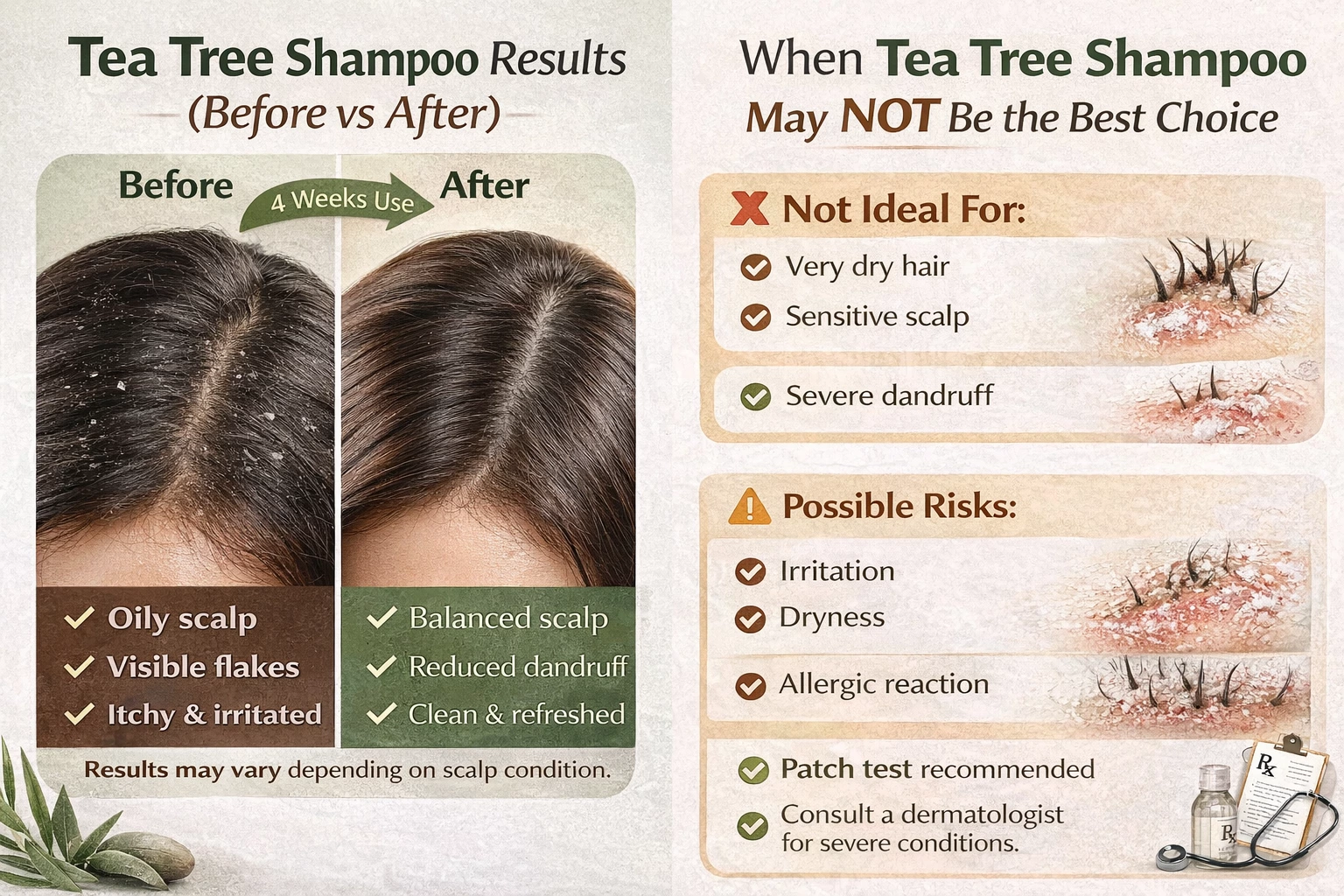
Not Ideal For:
- Very dry or damaged hair
- Highly sensitive scalp
- Bleached or chemically treated hair (unless moisturizing formula)
Potential Risks and Side Effects
1. Scalp Irritation
Some users may experience:
- Redness
- Burning sensation
- Allergic reactions
👉 Always do a patch test before use.
2. Dryness and Hair Roughness
Overuse or strong formulas may:
- Strip natural oils
- Cause dryness
- Make hair feel brittle
3. Not a Medical Treatment
Tea tree oil shampoo:
- Cannot replace medicated dandruff treatments
- Is less effective for severe scalp conditions
How to Choose the Right Tea Tree Oil Shampoo (Most People Get This Wrong)
Not all tea tree shampoos are equally effective. The formula matters more than the ingredient itself.
Look for:
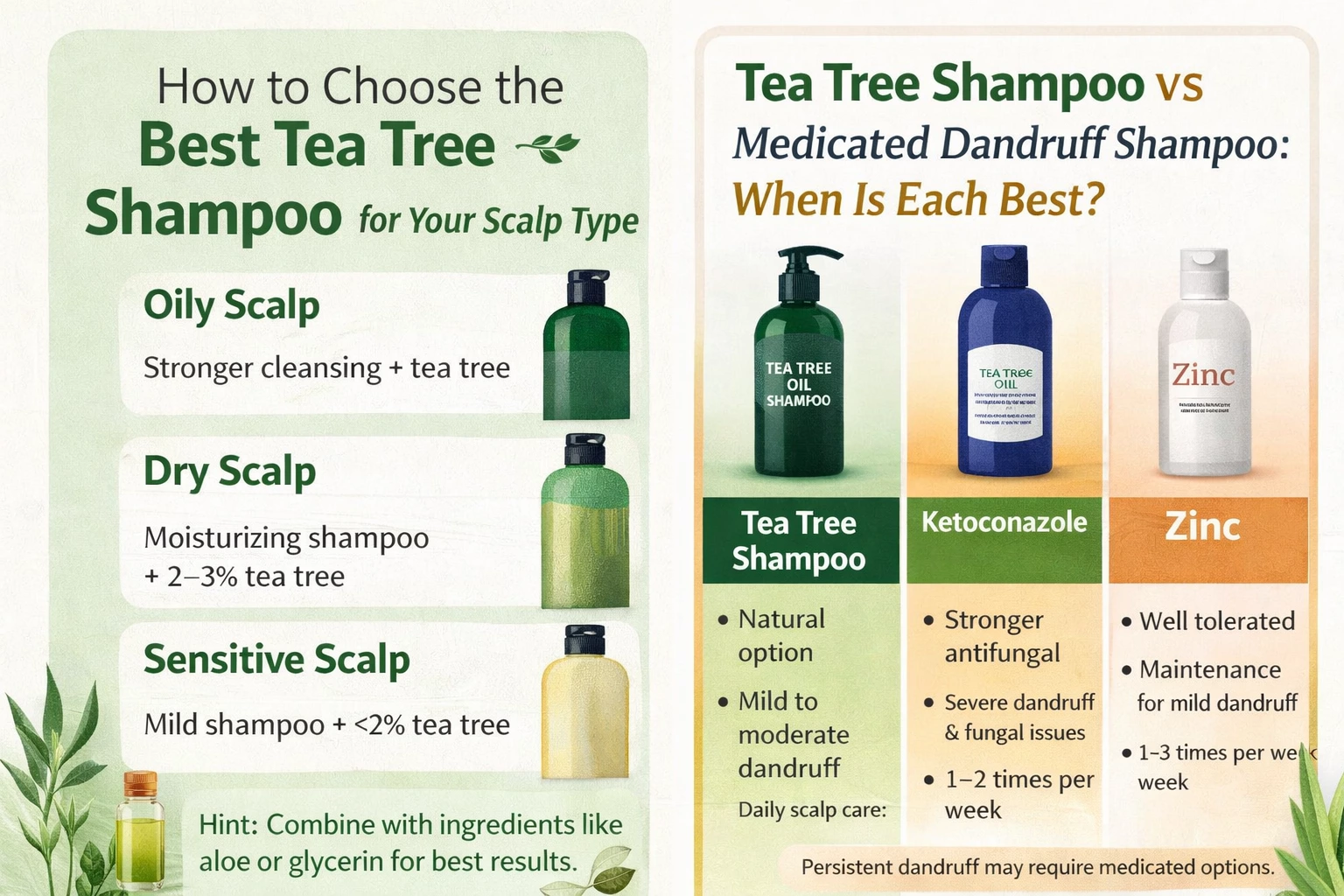
- Balanced tea tree oil concentration (around 2–5%)
- Mild cleansing system (avoid overly harsh sulfates if scalp is sensitive)
- Moisturizing ingredients (e.g., glycerin, aloe, argan oil)
- Scalp-support ingredients (e.g., salicylic acid for flakes)
Avoid:
- High fragrance irritation
- Overly drying formulas
- “Tea tree in name only” products with minimal active content
Industry Insight: Why Formula Matters More Than Just Tea Tree Oil
From a product development perspective, tea tree oil alone does not determine performance.
A high-quality tea tree shampoo depends on:
- Surfactant system (cleansing strength vs mildness)
- Moisture balance
- Scalp-soothing ingredients
- Stability and compatibility of essential oils
👉 This is why two shampoos with “tea tree oil” can perform completely differently.
👉 Looking to Develop or Source a High-Performance Tea Tree Shampoo?
If you are building a brand or sourcing products, choosing the right formulation partner is critical.
A reliable manufacturer can help you:
- Balance tea tree oil concentration with scalp safety
- Customize formulas for oily scalp, dandruff, or sensitive users
- Combine tea tree with complementary ingredients like rosemary or salicylic acid
- Ensure stability, compliance, and consistent product quality
👉 You can explore professional shampoo formulation and private label options here:
https://www.dzbiology.com/shampoo
Tea Tree Shampoo vs Medicated Dandruff Shampoo
| Type | Best For | Strength |
|---|---|---|
| Tea Tree Shampoo | Mild dandruff, oily scalp | Moderate |
| Ketoconazole Shampoo | Severe dandruff, fungal issues | Strong |
| Zinc Shampoo | Maintenance care | Mild–Moderate |
👉 If dandruff is persistent, medicated options may be more effective.
How to Use Tea Tree Oil Shampoo Correctly
- Use 2–3 times per week
- Massage into scalp (not just hair)
- Leave for 2–3 minutes before rinsing
- Follow with conditioner
FAQs
1. Can I use tea tree oil shampoo every day?
No. Overuse can cause dryness. 2–3 times per week is ideal.
2. Does tea tree shampoo help hair grow faster?
Not directly. It improves scalp conditions, which may support healthier growth.
3. Is tea tree oil shampoo good for oily hair?
Yes. It helps control excess oil and keeps the scalp fresh longer.
4. Can tea tree oil shampoo cause hair loss?
No, but excessive dryness may lead to breakage if overused.
5. Is tea tree shampoo safe for sensitive scalp?
Not always. Sensitive users should choose mild formulas and patch test first.
Final Verdict
Tea tree oil shampoo is an effective scalp-care solution, especially for dandruff and oily scalp.
- ✅ Helps with flakes, oil, and itchiness
- ❌ Not a direct hair growth treatment
- ⚠️ Requires proper formulation and usage
👉 Best positioned as a scalp treatment shampoo, not a miracle hair growth product.