Non Toxic Shampoo
Non Toxic Shampoo: What It Really Means, Ingredients to Avoid & How to Choose Safely
A non toxic shampoo is a hair cleansing product formulated without potentially harmful ingredients like sulfates, parabens, phthalates, and certain synthetic additives—while still delivering effective cleansing and scalp-friendly performance.
👉 In simple terms: non toxic shampoo focuses on safer ingredients, balanced formulation, and long-term scalp health—not just “natural” marketing claims.
Why More People Are Switching to Non Toxic Shampoo
Consumers are becoming more ingredient-aware, especially in daily-use products like shampoo.
Key Reasons:
- Scalp irritation from harsh cleansers
- Concerns about long-term chemical exposure
- Hair dryness caused by over-stripping formulas
- Growing demand for clean and transparent beauty products
👉 Daily-use products like shampoo accumulate exposure over time, making ingredient safety more important.
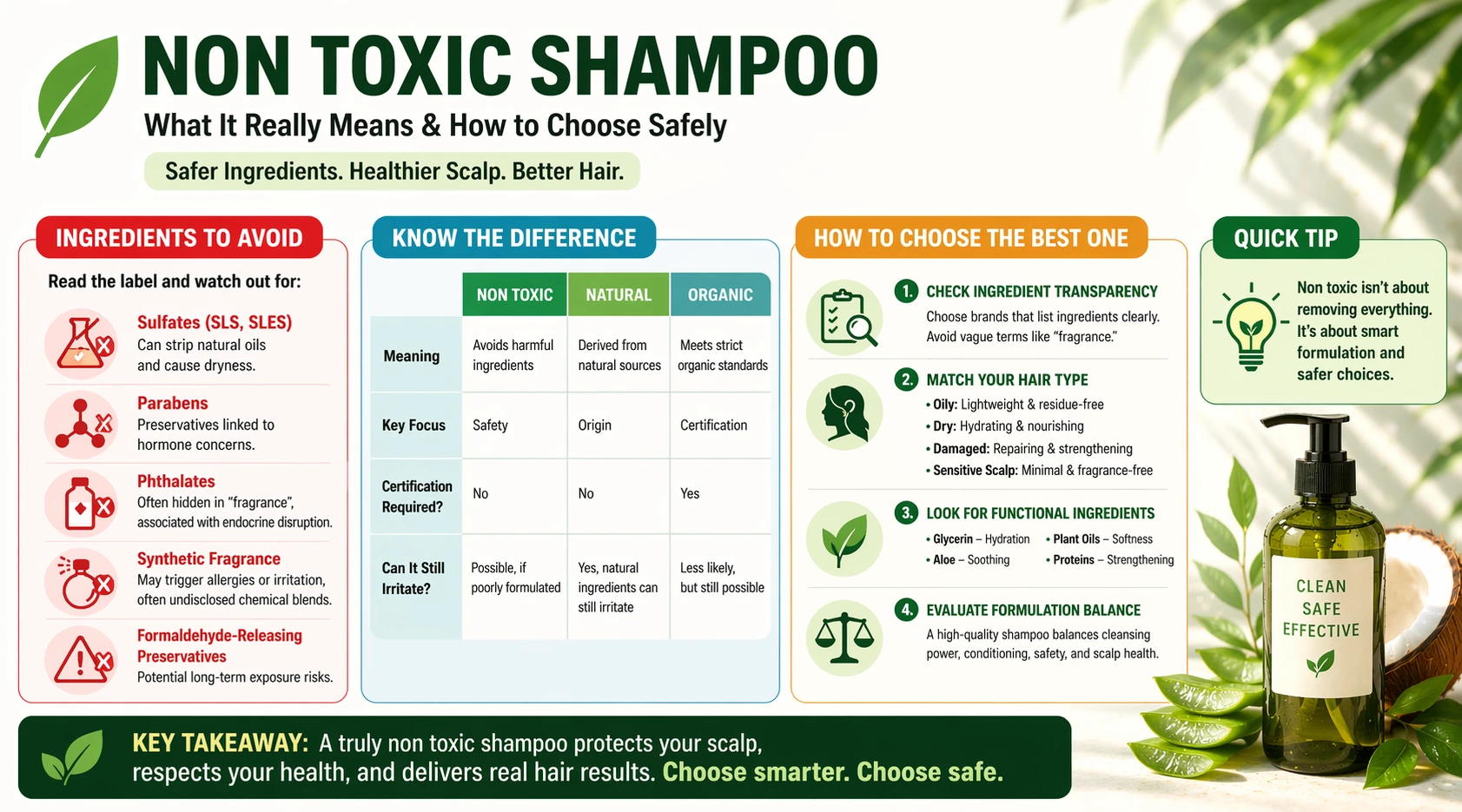
Ingredients to Avoid in Shampoo (Quick Safety Guide)
Understanding what to avoid is the first step.
Common Ingredients of Concern
Sulfates (SLS, SLES)
- Strong cleansing agents
- Can strip natural oils and cause dryness
Parabens
- Preservatives linked to hormone concerns
Phthalates
- Often hidden in “fragrance”
- Associated with endocrine disruption
Synthetic Fragrance
- May trigger irritation or allergic reactions
- Lack of transparency
Formaldehyde-Releasing Preservatives
- Potential long-term exposure risks
What Makes a Shampoo Truly “Non Toxic”?
From a formulation perspective, non toxic shampoo is about balance—not elimination.
Key Characteristics:
- Mild, skin-friendly surfactants (often coconut-derived)
- No harsh stripping ingredients
- Balanced pH for scalp health
- Functional ingredients for hydration and conditioning
- Transparent labeling
👉 A good non toxic shampoo must still clean effectively—otherwise it fails in real use.
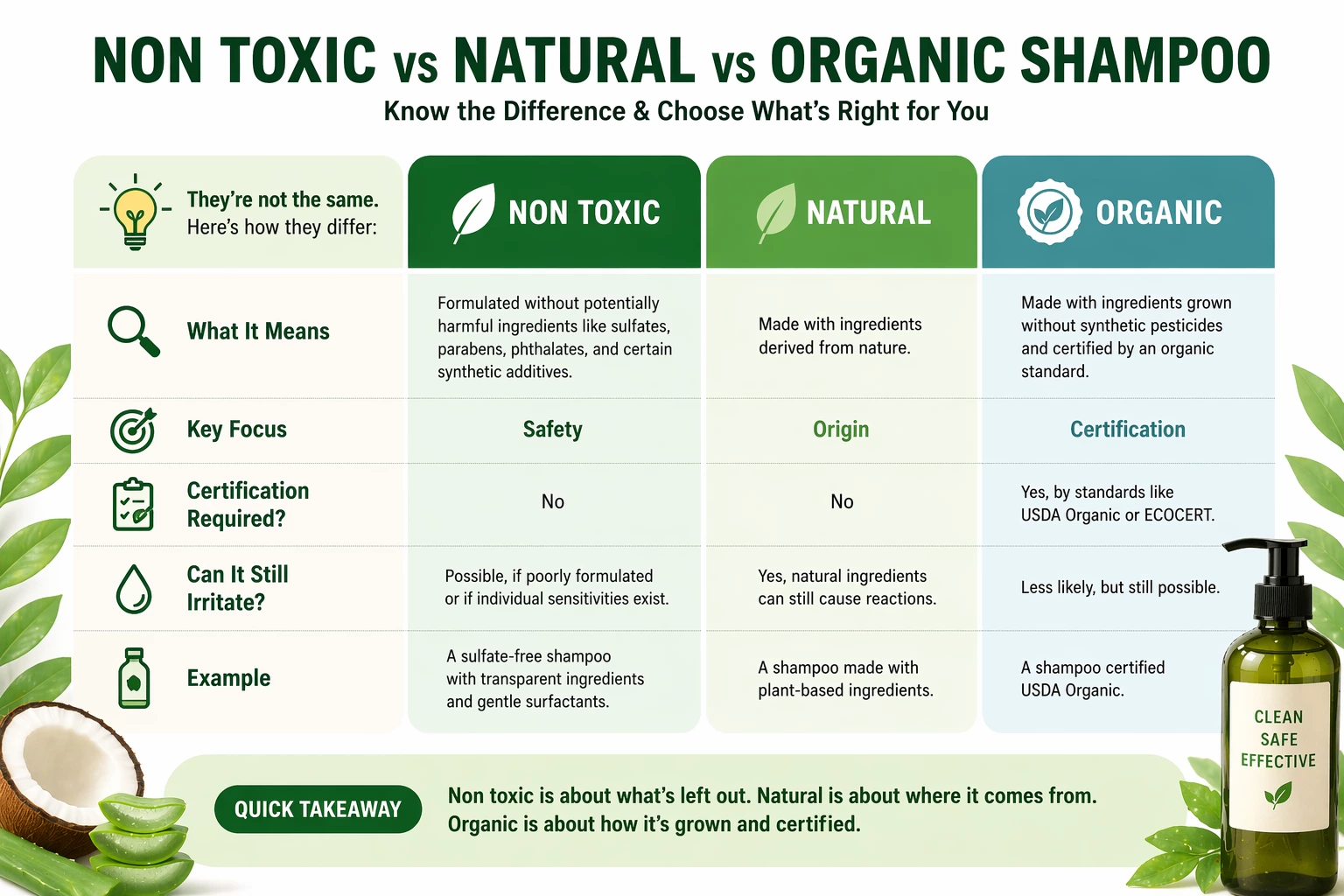
Non Toxic vs Natural vs Organic Shampoo (Important Difference)
This is one of the biggest sources of confusion.
| Type | Meaning | Key Focus |
|---|---|---|
| Non Toxic | Avoids harmful ingredients | Safety |
| Natural | Derived from natural sources | Origin |
| Organic | Certified organic ingredients | Certification |
👉 Non toxic ≠ natural ≠ organic
A product can be natural but still irritating, or non toxic without being fully organic.
Benefits of Using Non Toxic Shampoo
1. Healthier Scalp
Less irritation, better balance.
2. Improved Moisture Retention
Gentler cleansing helps preserve natural oils.
3. Reduced Long-Term Exposure Risk
Minimizes contact with controversial ingredients.
4. Better for Sensitive Users
Suitable for reactive skin types.
Risks & Limitations (Balanced View)
1. Less Foam
Mild surfactants create less lather.
2. Transition Period
Hair may take time to adjust.
3. Not All Clean Products Perform Well
Formulation quality matters.
👉 A poorly formulated “clean shampoo” can perform worse than a well-balanced traditional one.
How to Choose the Best Non Toxic Shampoo (Actionable Guide)
This is the most important section for both ranking and conversion.
Step 1: Check Ingredient Transparency
Avoid vague terms like “fragrance” without details.
Step 2: Match Your Hair Type
- Oily hair → lightweight cleansing formula
- Dry hair → moisturizing ingredients
- Damaged hair → repair + hydration
- Sensitive scalp → minimal ingredient formulas
Step 3: Look for Functional Ingredients
- Glycerin → hydration
- Aloe → soothing
- Plant oils → softness
- Proteins → strengthening
Step 4: Evaluate Formulation Balance
From a manufacturing perspective:
👉 A high-quality shampoo balances:
- Cleansing strength
- Conditioning effect
- Ingredient safety
Best Non Toxic Shampoo by Hair Type (Decision Guide)
For Dry Hair
- Look for moisturizing, sulfate-free formulas
- Focus on hydration + conditioning
For Oily Hair
- Use lightweight, residue-free formulas
- Avoid heavy oils
For Sensitive Scalp
- Minimal ingredients
- Fragrance-free preferred
For Damaged Hair
- Include repair + moisture
- Avoid harsh surfactants
👉 Example: Choosing a Reliable Non Toxic Shampoo Supplier
If you are looking for a solution that combines safety, performance, and scalable production, you can explore:
https://www.dzbiology.com/shampoo
From an industry and manufacturing standpoint, a reliable supplier should offer:
- Ingredient safety compliance
- Stable and tested formulations
- Customizable solutions for different markets
- Balance between performance and clean standards
👉 For brands, formulation expertise and production capability are just as important as ingredient selection.
Common Mistakes When Choosing Non Toxic Shampoo
Avoid these:
- Assuming “natural” = safe
- Choosing based on marketing only
- Ignoring hair type
- Overlooking formulation quality
FAQs
What is the safest shampoo for daily use?
A non toxic shampoo with mild surfactants and balanced conditioning ingredients.
Is sulfate-free shampoo always non toxic?
No. Sulfate-free does not guarantee full ingredient safety.
Can non toxic shampoo clean effectively?
Yes—if properly formulated.
Is non toxic shampoo better for hair growth?
Indirectly, yes. A healthy scalp supports better growth.
How long before results appear?
Typically 2–4 weeks for noticeable improvement.