Will Coconut Oil Help Dry Scalp
Will Coconut Oil Help Dry Scalp? Benefits, Risks, and How to Use It Safely
Quick Answer
Yes, coconut oil can help a dry scalp by reducing moisture loss, softening dry flakes, and supporting the scalp barrier. But it does not work for every scalp condition. If your flakes are caused by dandruff, seborrheic dermatitis, or a yeast-related scalp issue, coconut oil may not solve the root problem and may even make symptoms worse in some cases.
Why Coconut Oil May Help a Dry Scalp
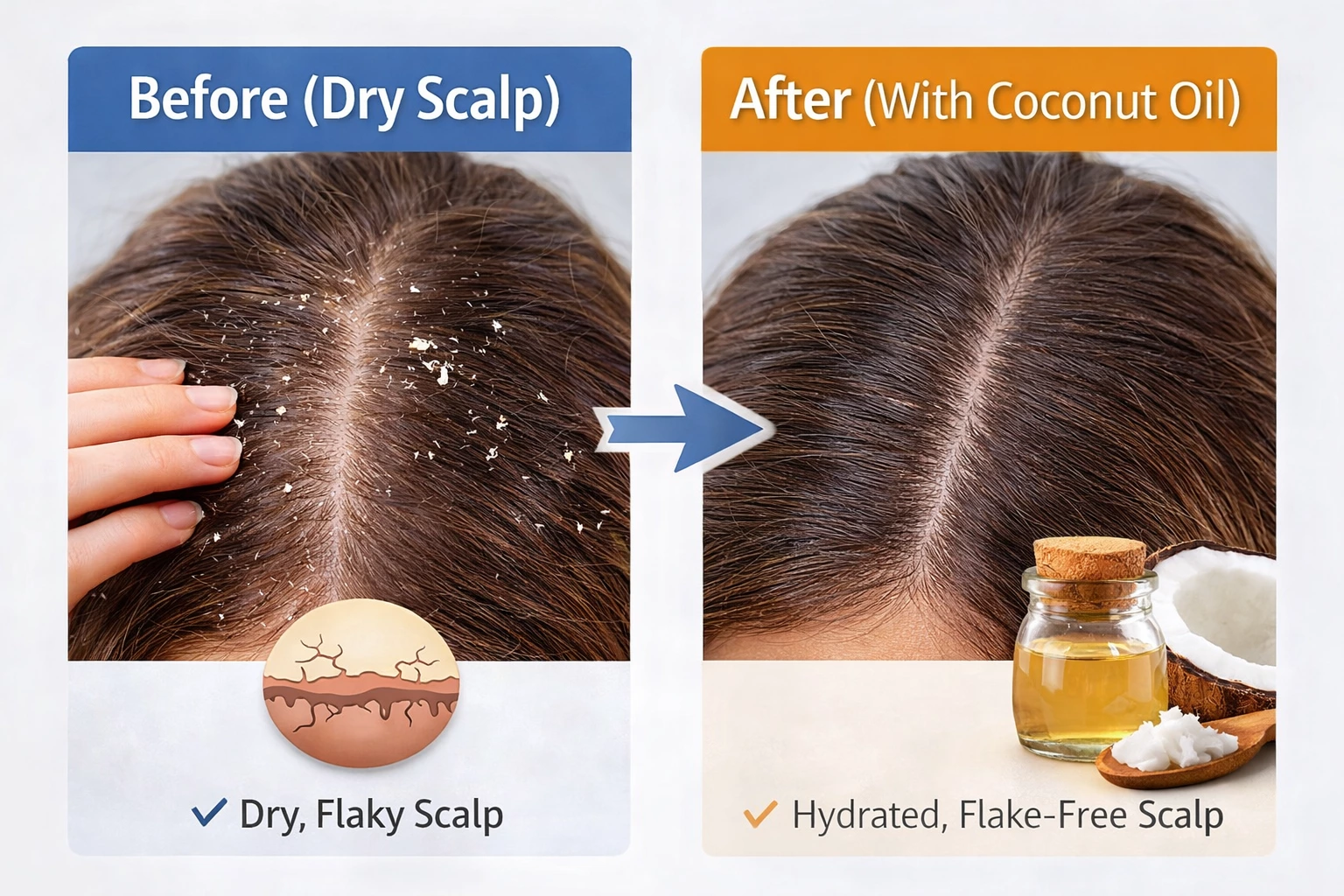
Coconut oil is commonly used in hair and scalp care because it works as a rich emollient. In simple terms, it helps reduce water loss from the scalp and can make dry, tight skin feel more comfortable. Health and Verywell Health also note that coconut oil is often used as a pre-wash treatment or scalp mask to improve moisture and reduce dryness.
1. It helps lock in moisture
A dry scalp often has a weakened moisture barrier. Coconut oil forms a protective layer that helps reduce moisture loss, which may make the scalp feel less tight, less flaky, and less irritated.
2. It can soften dry flakes
When flakes are caused by dryness rather than excess oil or inflammation, coconut oil may soften them and make the scalp feel smoother. This is one reason it is often used in home remedies for mild scalp dryness.
3. It may support a simple pre-shampoo scalp routine
Several health publishers recommend coconut oil as a pre-wash treatment. Applied before shampooing, it may help limit dryness and reduce the stripped feeling that some harsh shampoos cause.
When Coconut Oil Works Best
Coconut oil is most likely to help when scalp dryness is linked to:
- cold or dry weather
- overwashing
- harsh shampoos
- heat styling
- mild dehydration of the scalp
- a need for extra softness before washing
In these situations, coconut oil works best as a supportive moisture treatment, not as a cure for every scalp issue.
Dry Scalp vs. Dandruff: Why This Matters
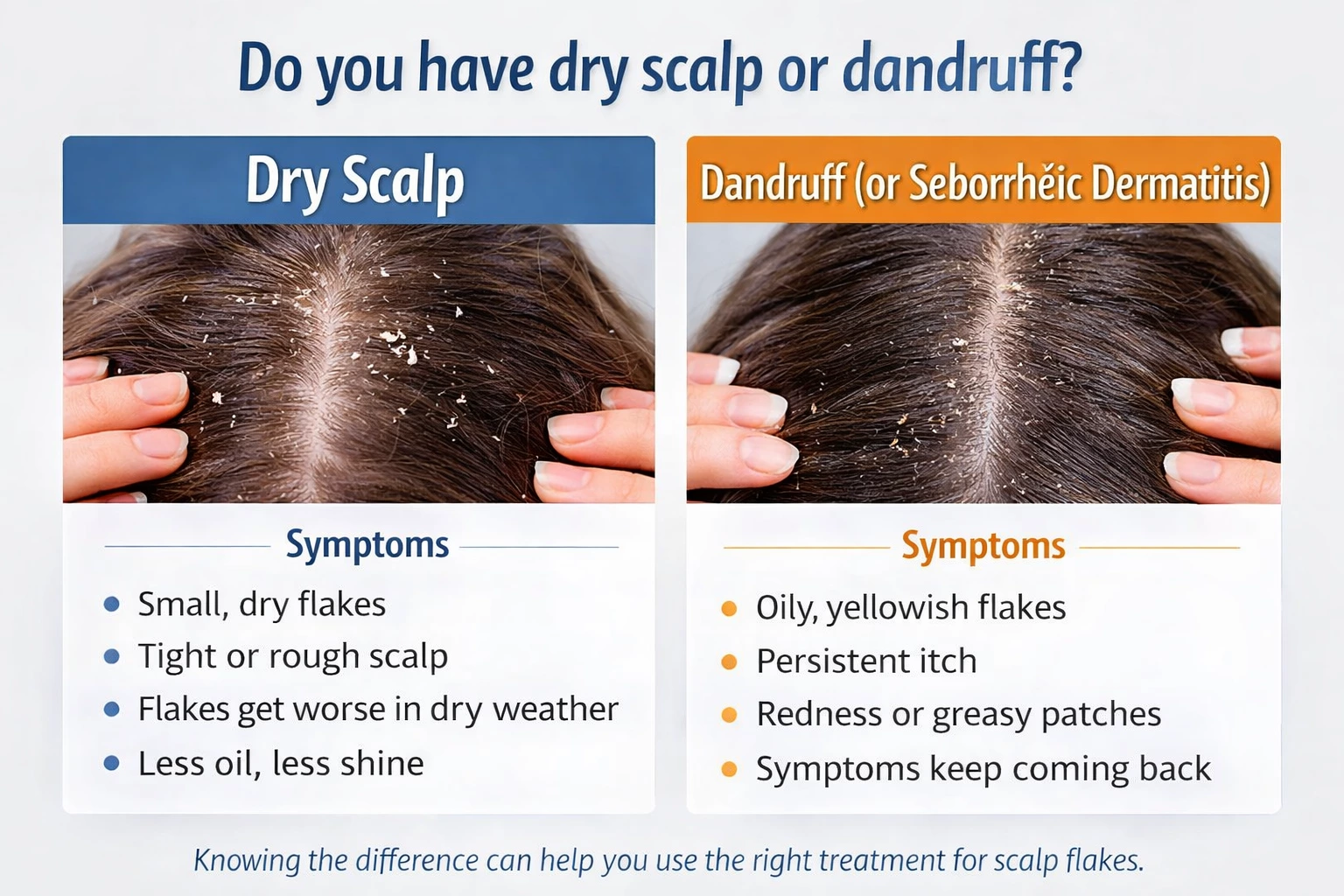
One of the biggest reasons people get poor results from coconut oil is that they confuse dry scalp with dandruff.
Dry scalp usually looks like this
- small, dry flakes
- tight or rough-feeling scalp
- dryness that gets worse in cold weather
- less oil, less shine
Dandruff or seborrheic dermatitis often looks like this
- oily or yellowish flakes
- persistent itch
- redness or greasy patches
- symptoms that keep coming back
This difference matters because coconut oil may help dryness, but dandruff is often linked to a different underlying issue, including yeast and inflammation. In those cases, medicated shampoos or targeted scalp treatments may be more appropriate.
Who Should Try Coconut Oil for Dry Scalp
Coconut oil may be worth trying if you:
- have mild dry scalp without obvious inflammation
- notice flakes mostly in dry weather
- use clarifying or sulfate-heavy shampoos often
- want a simple pre-shampoo moisture treatment
- find that your scalp feels tight after washing
Who Should Avoid Coconut Oil
Coconut oil may not be the best choice if you:
- have oily yellow flakes
- suspect dandruff or seborrheic dermatitis
- get scalp buildup easily
- have very fine hair that gets greasy fast
- are acne-prone around the hairline
- notice itching or worsening flakes after use
Verywell Health notes that coconut oil does not work equally well for every cause of flaking and may worsen some dandruff-related cases or create buildup for certain users.
How to Use Coconut Oil for Dry Scalp Safely
The safest approach is to use a small amount and treat it as a scalp treatment, not as something to pile on heavily.
Method 1: Pre-shampoo treatment
This is the best option for most people.
- Warm a small amount of coconut oil in your hands.
- Apply it lightly to the scalp.
- Massage gently for 1 to 2 minutes.
- Leave it on for 20 to 30 minutes.
- Wash with a gentle shampoo.
This approach aligns with how Health and Verywell Health describe coconut oil use before shampooing.
Method 2: Overnight treatment
Use this only if your scalp is very dry and your hair tolerates oil well.
- Apply a thin layer, not a heavy coating.
- Protect your pillow with a towel or sleep cap.
- Shampoo thoroughly the next morning.
Leaving too much oil on overnight may cause buildup for some scalp types.
Method 3: Blend with other soothing ingredients
For a lighter scalp-care routine, coconut oil is often paired with ingredients such as:
- aloe vera for soothing
- jojoba oil for a lighter feel
- a gentle sulfate-free shampoo after treatment
What Type of Coconut Oil Is Best?
If you want to try coconut oil on a dry scalp, use unrefined or virgin coconut oil when possible. Health specifically recommends higher-quality virgin or unrefined coconut oil and also suggests doing a patch test first to reduce the chance of irritation.
Risks and Side Effects
Even though coconut oil is natural, it is not risk-free.
1. It may worsen the wrong kind of flaking
If the real issue is dandruff, seborrheic dermatitis, or another inflammatory scalp condition, coconut oil may not help enough and may sometimes make the scalp feel heavier or more irritated.
2. It can cause buildup
Using too much oil or not washing thoroughly afterward can leave the scalp greasy and weigh hair down. This is especially common with fine hair or oily scalp types.
3. It may irritate sensitive skin
A patch test is a smart first step. Health recommends testing first, especially if you are sensitive to skincare or haircare ingredients.
Better Alternatives if Coconut Oil Feels Too Heavy
If coconut oil feels too rich for your scalp, these options may be easier to tolerate:
- jojoba oil for a lighter feel
- argan oil for softer hydration
- aloe vera for soothing comfort
- medicated dandruff shampoo if flakes are oily or persistent
- gentle sulfate-free shampoo if dryness is triggered by harsh cleansing
Medical News Today includes oils and soothing ingredients such as aloe vera and jojoba among common home options for dry scalp, while dandruff-focused pages more often point users toward targeted treatments when yeast is involved.
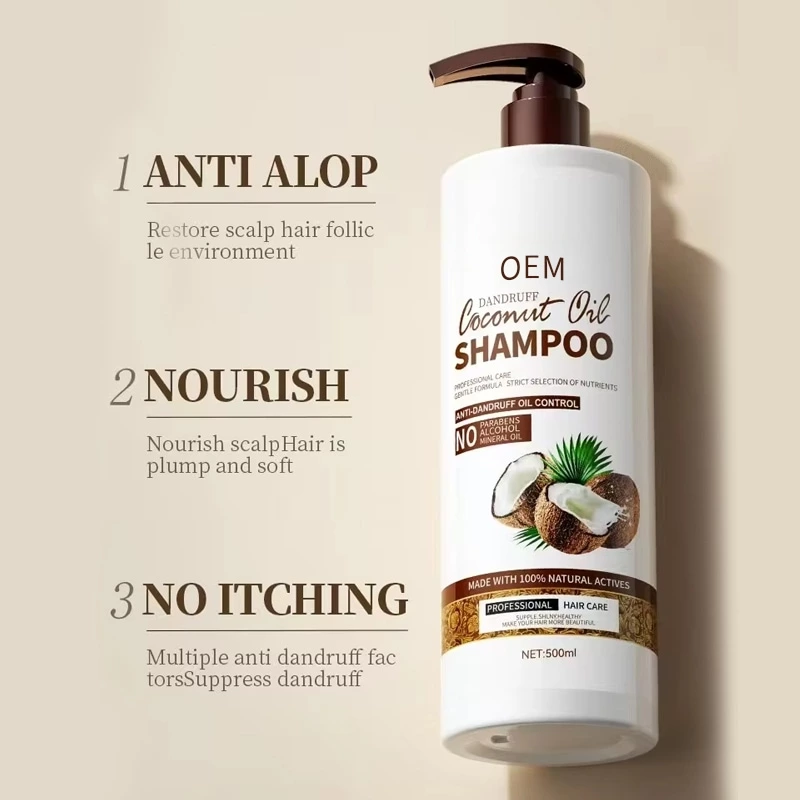
For a more balanced approach, many people find that using a professionally formulated coconut oil shampoo provides hydration without the heaviness of pure oil. You can explore an example here:
https://www.dzbiology.com/shampoo/coconut-oil-shampoo
When to See a Dermatologist
You should stop self-treating and seek professional advice if you notice:
- thick or greasy flakes
- persistent redness
- scalp pain
- swelling
- bleeding from scratching
- hair loss linked to inflammation
- symptoms that do not improve after a few weeks
Medical News Today and Verywell Health both note that persistent or severe scalp symptoms should be evaluated more carefully rather than managed only with home remedies.
Final Verdict
So, will coconut oil help dry scalp?
For many people with mild dryness, yes, it can help. It is especially useful as a simple pre-shampoo moisture treatment when the scalp feels tight, flaky, and dry. But if your flakes are oily, persistent, or linked to dandruff, coconut oil may not be the best answer. In that case, a more targeted scalp-care routine is usually a better long-term solution.
FAQs
Can coconut oil make dandruff worse?
Yes. If the flakes are caused by dandruff or seborrheic dermatitis rather than dryness alone, coconut oil may not help enough and may worsen buildup for some people.
How often should I use coconut oil on my scalp?
Start with once or twice a week. That is a common frequency suggested in hair and scalp care guidance. Using it too often may lead to buildup.
Should I leave coconut oil on overnight?
You can, but only if your scalp is very dry and your hair handles oil well. For most people, a 20 to 30 minute pre-shampoo treatment is enough.
What shampoo should I use after coconut oil?
A gentle, sulfate-free shampoo is usually the safest choice if your scalp is dry. If you have oily flakes or dandruff, a dandruff shampoo may be more appropriate.
What is better than coconut oil for a sensitive scalp?
A lighter option such as jojoba oil or soothing ingredients like aloe vera may work better if coconut oil feels too heavy.